Fence Repair in Columbus
Fix leaning posts, broken boards, sagging gates, and damaged panels on your Columbus fence without replacing the whole run.
Fix leaning posts, broken boards, sagging gates, and damaged panels on your Columbus fence without replacing the whole run.
Mills Fence Co. handles fence repair in Columbus, Ohio for homeowners and property owners with leaning posts, broken boards or pickets, sagging gates, bent chain link, and damaged panels. If part of your fence is failing but the rest still has life in it, call or send a request and we will look at what is wrong and talk through the fix.
Most fence problems start small. A gate begins to drag, a post wobbles when you push it, or one board comes loose after a windy night. Left alone, a single weak spot tends to load the sections beside it, so a short repair can turn into a long one. Tell us what you are seeing, and we will help you sort out whether it is a quick fix or a bigger job.
Some damage is obvious after a storm. Other damage creeps in over a few seasons. These are the signs worth acting on:
If you can spot two or three of these along one stretch, the cause is often underneath, in the posts or footings, rather than in the visible panels.
Repair work usually falls into a handful of jobs. Which one applies depends on your fence type and what failed first.
Leaning or rotted posts are the most common reason a fence goes crooked. Fixing them can mean resetting a post, replacing a single post, or re-securing rails so the line pulls back straight. Getting this part right matters more than the cosmetic work on top of it.
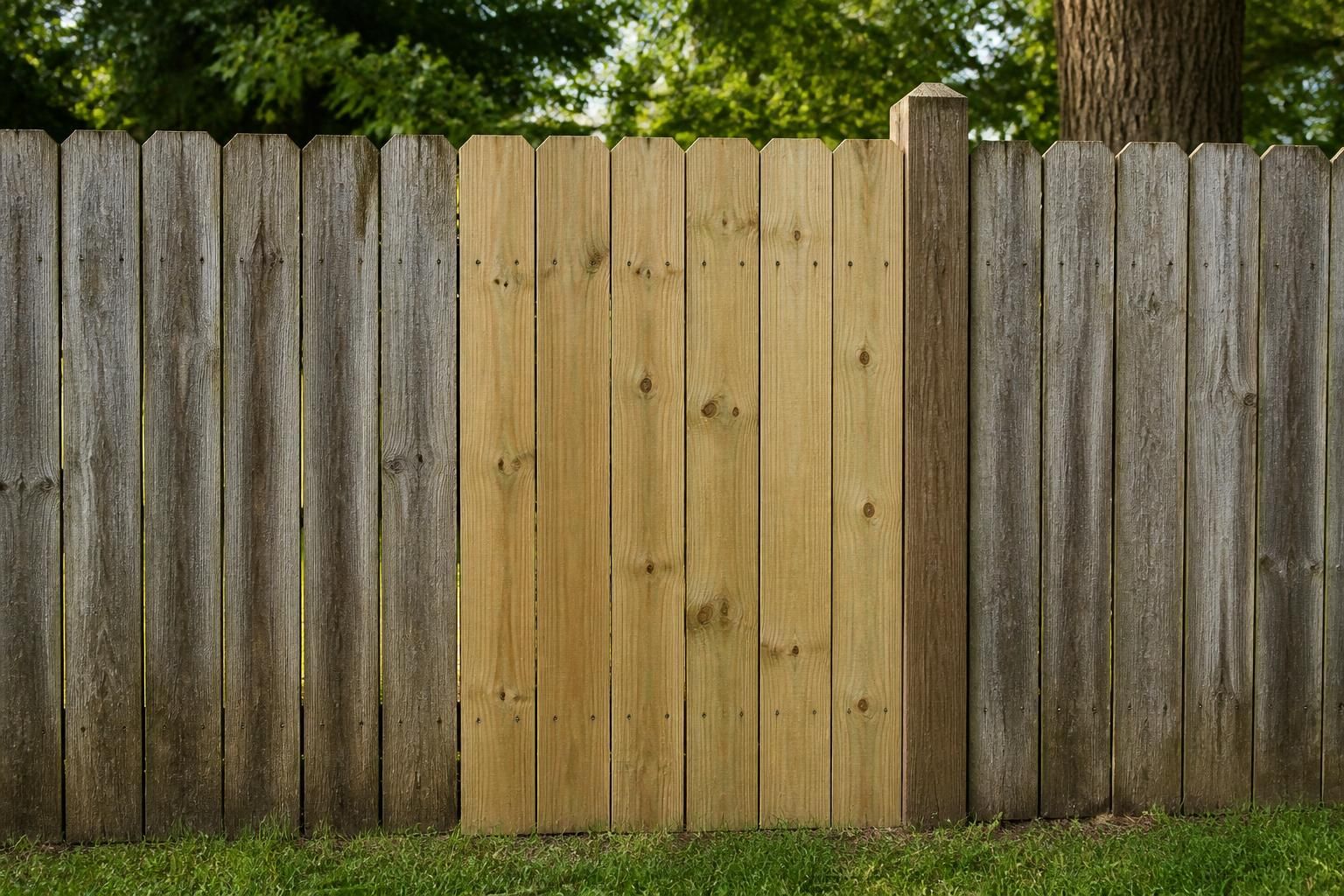
Replacing broken boards or pickets, swapping out a damaged panel, rehanging a sagging gate, and replacing worn hinges or latches are all everyday repairs. On chain link, that can mean re-tensioning or replacing damaged fabric. On vinyl and aluminum, it often means replacing a cracked or bent section instead of patching it.
Homeowners often ask whether a fence is worth fixing or whether it is time for a new one. This page covers repair: keeping the fence you have and correcting the parts that failed. If most of the posts are rotted, or the damage runs along most of the line, a new fence may make more sense, and that falls under our Fence Installation service.
A rough way to think about it:
We will tell you honestly which situation you are in when we look at the fence.
Every property is different, but most repair jobs follow the same general path. You call or send a request describing the problem. The fence gets looked at, usually walking the full line and not just the broken spot. The cause is identified, the scope is agreed on, and the repair is scheduled around the materials needed.
With Mills Fence Co., the point of that first look is to find what is actually failing. A leaning panel, for example, might be a loose rail, a cracked post, or a footing that shifted. Fixing the wrong one means calling someone back in a few months.
Central Ohio fences deal with a lot of movement. Winters typically bring repeated freeze and thaw cycles, and many Columbus-area yards sit on clay-heavy soil that holds water and shifts as it freezes and dries. That combination is hard on posts, which is why leaning and heaving often show up in late winter and spring. Summer storms and strong winds add stress to taller privacy styles, and wood near the ground tends to rot faster where water pools.
We work with homeowners across Columbus and nearby areas including Dublin, Westerville, Hilliard, Gahanna, Grove City, Reynoldsburg, Upper Arlington, Worthington, and New Albany. Local conditions are similar enough that the same warning signs apply across these communities.
Whoever you hire, here are standards you can use to judge the work:
Repair pricing depends on the actual work involved, so any honest number comes after someone has seen the fence. The main factors are:
A clear written quote should spell out which sections are being repaired, what materials will be used, what is included for cleanup, and how changes are handled if more damage is found once work begins. If something is not in writing, ask about it.
Whether you call us or someone else, ask these before agreeing to any fence repair in the Columbus area:
It depends on the scope. Replacing a few boards or rehanging a gate is a smaller job than resetting several posts or replacing multiple panels. Material availability can also affect timing, especially for specific vinyl or aluminum styles.
Often, yes. If the posts and rails are mostly sound, a lean can be corrected by resetting or replacing the problem posts and re-securing the sections. If the wood is rotted through along much of the line, replacement may be the better value.
It comes down to the number of damaged sections, the fence material, the condition of the posts, access to the work area, and any hauling needed. A written quote after the fence is looked at gives you the clearest picture.
We work with wood, vinyl, aluminum, and chain link fences, along with security fencing. Tell us what you have and what is wrong, and we can talk through the options.
Repairs can be done through much of the year, but many homeowners find problems after winter or after storms. Soil that is frozen or saturated can make post work harder, so timing may shift with the weather.
A walk along the fence line every spring and after major storms catches most problems early. Push on posts, check gate hardware, and look for soft wood or loose sections.
If part of your fence is leaning, broken, or no longer doing its job, call or send a request through this page. Describe what you see, mention the fence material, and we will take it from there.
Tell us about your property, the type of fence you have in mind, and what you want it to do. We will follow up to talk through the next step.