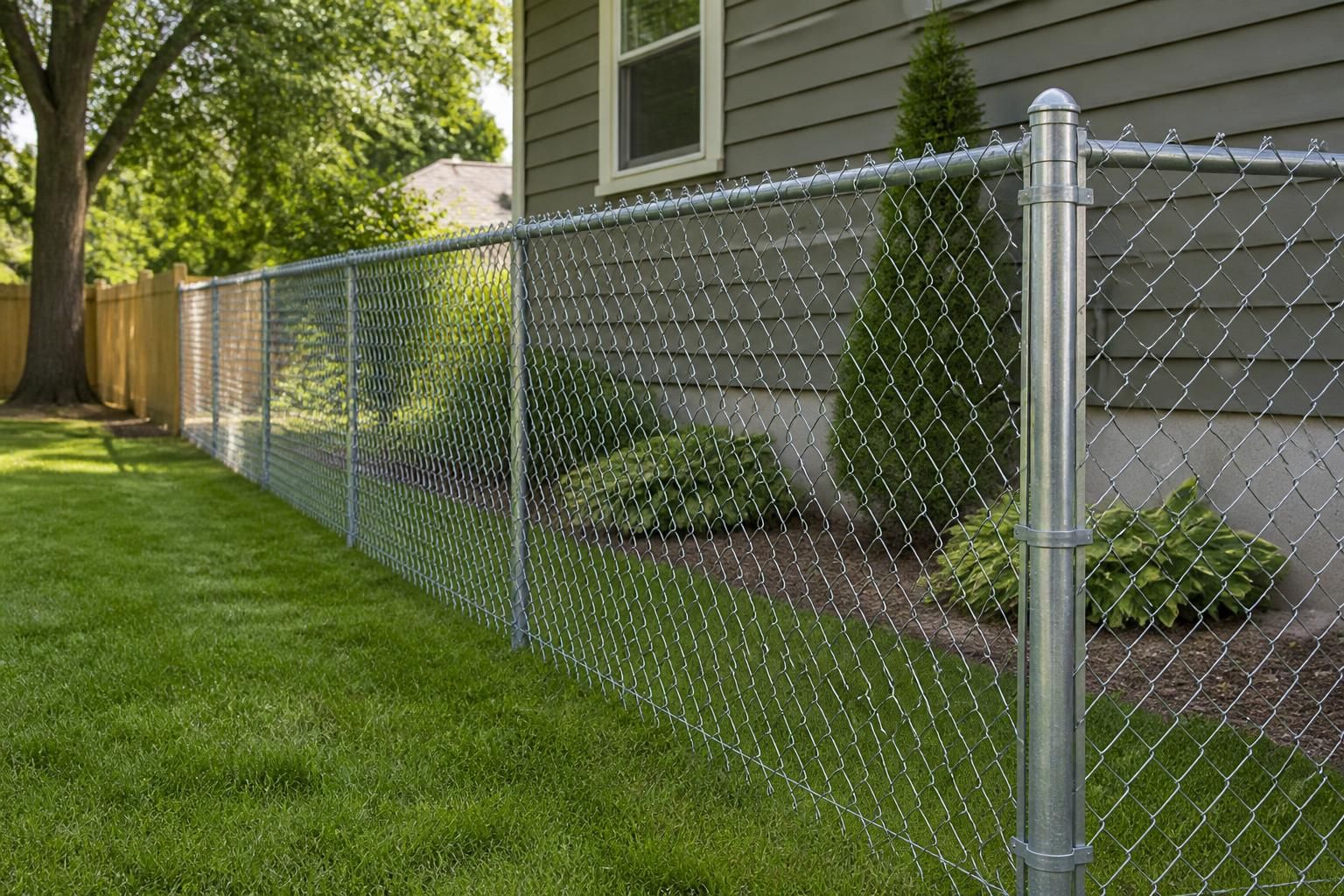
Chain Link Fences in Columbus
Chain link fence installation and repair for Columbus homes, built around your yard, your budget, and your boundary.
Chain link fence installation and repair for Columbus homes, built around your yard, your budget, and your boundary.
Mills Fence Co. installs and repairs chain link fences for Columbus, Ohio homeowners who need a durable, affordable way to enclose a yard, keep pets in, or mark a property line. To get started, call or send a request with a rough idea of where the fence should run, how tall it needs to be, and whether you are building new or replacing old fence.
Maybe your dog has figured out the gap by the gate, or the old fence is leaning after a few winters of freezing and thawing. Maybe the fabric is rusted and sagging, or you just bought a house with no fence at all and want the yard secured before spring. Whatever the starting point, the next step is a clear plan: where the line goes, what style fits, and what the job will take.
Chain link is one of the most common fence types around Columbus and the surrounding suburbs, including Dublin, Westerville, Hilliard, Gahanna, Grove City, Reynoldsburg, Upper Arlington, Worthington, and New Albany. On this page, we cover the jobs homeowners usually ask about:
Homeowners often call about a fence that looks bad and assume the whole thing has to go. Sometimes that is true, but often it is not. Repair means fixing a defined problem and keeping the rest of the fence. Replacement means taking the run down and building new. Both are part of what we do, and this page leans toward new installation and full replacement. If you only need a section fixed, our Fence Repair service covers it.
A few rules of thumb help you decide:
Two fences can both be called chain link and look and last very differently. Settle these choices before you compare quotes.
Galvanized steel mesh has the familiar silver finish and is a practical, budget-friendly choice. Vinyl-coated mesh, commonly seen in black or green, blends into landscaping more and adds another layer of protection against the weather. If the fence will be visible from your patio or front yard, many homeowners find the coated look worth considering.
Residential chain link commonly runs from about four feet up to six feet, depending on the purpose. A four-foot fence may be enough to define a yard, while a larger dog or a pool area may call for more height. Heavier-gauge wire is stiffer and holds up better to leaning, climbing, and pets. Gates deserve their own thought: where they swing, how wide they need to be for a mower or trailer, and which direction the latch faces.
If you want something other than chain link, such as Wood Fencing, Vinyl Fencing, Aluminum Fencing, or Custom Fencing, we can talk through those options. Chain link is the practical choice when cost, durability, and visibility across the yard matter most.
Central Ohio has cold winters, wet springs, and repeated freeze-thaw cycles. Much of the area sits on clay-heavy soil that holds water, swells when wet, and can shift as it freezes. For a fence, that means post depth and footing matter a lot. Posts that are set shallow or loosely are the usual reason chain link starts to lean after a few seasons.
Many Columbus-area lots also have buried utilities, sloping backyards, mature tree roots, and neighborhood or HOA rules, especially in newer suburban developments. Utility marking is a standard step before any digging, and slopes affect how the fabric is stepped or contoured to follow the ground. Check local fence rules and any HOA requirements before you commit to a height or style, because they vary by city and neighborhood.
Every property is different, but a typical chain link installation follows a familiar order:
Whoever you hire, use these standards to judge the work:
Chain link is usually among the more economical fence types, but the final number depends on the details of your yard and your choices. The main factors are:
A clear written quote should spell out the scope of work, the materials and height, the number and size of gates, what is included for removal and cleanup, and how changes will be handled if you adjust the plan after work begins. Mills Fence Co. is happy to walk through a quote line by line so you know what each part covers.
Ask these of any fence contractor in the Columbus area, including us:
It depends on the length of the run, the number of gates, whether an old fence needs to come out, and ground conditions. Wet weather and hard or rooty soil can slow things down. Once the layout and materials are set, we can give you a realistic window for your yard.
Pricing comes from footage, height, wire gauge, coating, gates, removal of any old fence, and site conditions such as slopes or tight access. After a look at your yard, we put those items in a written quote so you can see what each one covers.
Installers in central Ohio typically work through much of the year, with spring and fall being popular. Frozen ground can make digging harder in deep winter, and spring demand can fill schedules. Reaching out early gives you more room to plan.
Yes. Many Columbus-area cities and neighborhoods have rules on fence height, placement, and materials, and some require approval before you build. Check with your city and your HOA if you have one, and bring what you learn to the quote conversation.
Lifespan depends on the materials, the coating, how deeply the posts were set, and how the fence is treated over the years. Fences that are well installed and kept clear of vines, standing water, and heavy impact tend to hold up longest.
Often, yes. Isolated damage like a bent post, a torn section of mesh, or a loose gate can usually be repaired. If the problem runs along most of the fence, replacing the run can be the more sensible move. Send us a description or photos and we can help you sort it out.
Tell us about your property, the type of fence you have in mind, and what you want it to do. We will follow up to talk through the next step.