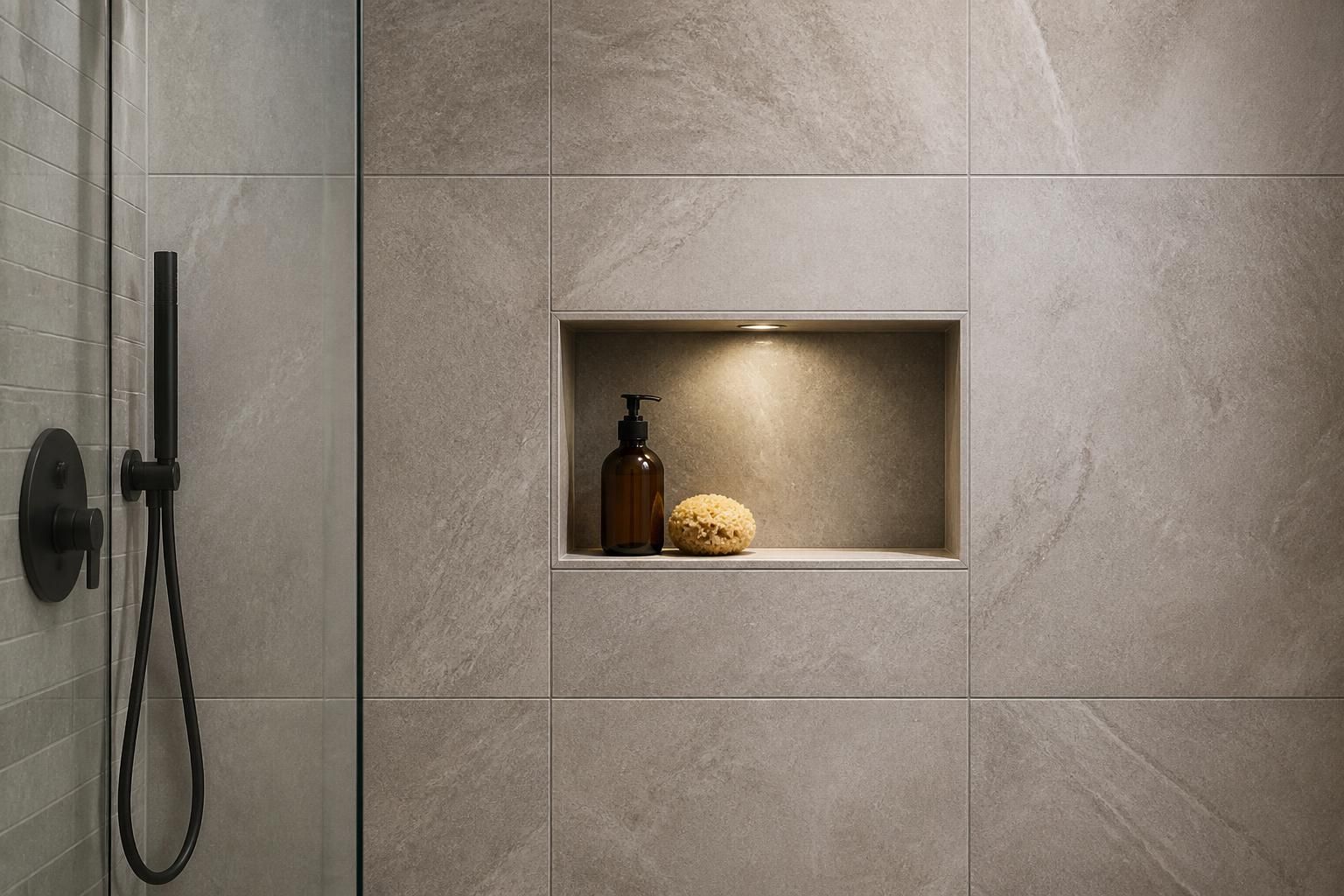
Tile and Stonework in Scottsdale
Tile and stone installation for Scottsdale kitchens and bathrooms, from backsplashes and shower walls to floors and surrounds.
Tile and stone installation for Scottsdale kitchens and bathrooms, from backsplashes and shower walls to floors and surrounds.
Carmel Kitchen & Bath handles tile and stonework in Scottsdale, AZ, including kitchen backsplashes, shower and tub walls, bathroom and kitchen floors, and natural stone surrounds. It is for homeowners with cracked, stained, or outdated tile, and for anyone planning a remodel who wants the surfaces laid out and installed cleanly. To get started, call or send a request and we will set up a visit to look at the space and talk through what you want.
Maybe the grout in your shower has gone dark and no amount of scrubbing brings it back. Maybe a floor tile sounds hollow underfoot, a corner has cracked, or there is a soft spot near the tub that you would rather not think about. Or you have picked out a tile you love and have no idea who should set it, or how the edges and corners should be handled. The next step is simple: tell us what you are seeing or what you are picturing, and we will help you sort out whether it is a repair, a partial redo, or a full retile.
Tile and stonework is the surface layer of a kitchen or bathroom, and it is the part you see and touch every day. Our work in this area typically includes:
Because we also handle design, cabinetry, countertops, and fixtures, the tile can be planned alongside everything it meets, so the backsplash lines up with the cabinets and the shower tile works with the valve and glass.
Tile rarely fails all at once. These are the clues that usually show up first:
Each location asks something different of the material and the installation.
A backsplash is the easiest way to change how a kitchen feels, and it is mostly about layout. Outlet placement, the height of the upper cabinets, and where the tile ends all show up in the finished look. We plan those points before the first tile is set so the pattern lands cleanly at corners, windows, and the edge of the countertop.
Wet areas need the most care because most of the work is hidden. What sits behind the tile, how water is directed, and how the floor slopes toward the drain matter as much as the tile you picked. Floors take daily wear, so the tile size, grout joint, and surface texture should match how the room is used. Most homes here are built on slabs, and the ground can shift a little over the years, so a sound base and careful layout help the floor handle that movement.
Homeowners often use the words tile, stone, and countertops interchangeably, but they are different jobs. This page covers tile and stonework: backsplashes, walls, floors, shower surfaces, and stone details. Slab countertops, such as quartz, granite, or marble tops, are a separate service with their own measuring, fabrication, and installation steps. If your project includes both, we can coordinate them so the backsplash and the countertop meet cleanly. If you are not sure which one you need, ask and we will point you the right way.
Every house is different, but most tile and stone projects follow the same general order:
Whoever you hire, these are fair standards to judge the work by:
Tile and stonework pricing depends on the job itself, so a fair quote starts with seeing the space. The main factors are:
A clear written quote should spell out the scope of work, which surfaces are included, what is allowed for materials and what you are choosing yourself, what demolition and prep are covered, and any extras. It should also say how changes are handled if something unexpected turns up behind a wall or the plan shifts partway through.
Before you hire anyone for tile work in the Scottsdale area, ask:
It depends on the size and the amount of prep. A backsplash is usually much quicker than a full shower or a whole floor, and demolition, waterproofing, and cure times add days. We can give you a realistic schedule once we have seen the space and know the scope.
It comes from the size of the area, the material, the pattern, the prep and demolition required, and any trim or custom details. We walk through those factors with you and put the scope in writing so you know what the quote covers.
Sometimes, but it depends on whether the existing surface is flat, solid, and dry. In wet areas or where tile is loose or cracked, removing it is usually the better choice. We check the condition before recommending either approach.
It depends on the grout type, how much water the area sees, and how often it is cleaned. Showers and kitchen backsplashes tend to need more attention than dry floors, and natural stone typically needs sealing on a regular basis. We can explain what your chosen materials call for.
It can. Mineral deposits build up on tile, glass, and fixtures, and some natural stone can etch if the wrong cleaner is used. Choosing the right finish and learning the right care routine makes a difference.
Not necessarily. You can start with a visit and a conversation about the look you want, and we can help narrow the options. Having a material in mind makes the quote more exact, but it is not required to begin.
If your tile is cracking, your grout is giving up, or you are planning a new backsplash or shower, call or send a request and we will arrange a visit to look at the project with you.
Start Your Remodel
Tell us about your space, your ideas, and your timeline. We will help you map out the first steps and set up a visit.